
A circuit breaker is a mechanism that halts all trading in the stock market when the KOSPI or KOSDAQ index has fallen 8% or more from the previous day for one consecutive minute. A sidecar is a mechanism that suspends only program trading orders for 5 minutes when futures prices have moved 5% or more for KOSPI and 6% or more for KOSDAQ and held that level for one consecutive minute. Whether what stops is the entire market or program trading alone — this single distinction explains most of the difference between the two systems. Both terms appear side-by-side in crash-day news alerts, but what investors can do during each activation is entirely different.

Sidecar — When Futures Surge, Only Program Trading Halts for 5 Minutes
The trigger condition for a sidecar is futures prices, not the spot index. According to KB Kookmin Bank kbthink's summary, activation occurs when KOSPI 200 futures rise or fall 5% or more from the previous day's close and hold that level for one consecutive minute. KOSDAQ conditions are dual: KOSDAQ 150 futures must move 6% or more while the KOSDAQ 150 index also moves 3% or more in the same direction for one consecutive minute.
Once activated, the effect of program trading orders is suspended for 5 minutes. Only large institutional automated orders pause briefly — direct orders placed by individuals via smartphone or computer continue to be accepted and executed as usual. Activation applies in both directions (up and down), is limited to one time per day (buy and sell counted separately), and does not activate during the first 5 minutes after market open or after 2:50 PM. Late-session volatility is outside the protection scope of this mechanism.
The reason the trigger is based on futures rather than the spot market lies in the sequence through which volatility spreads. Large capital direction changes appear first in the futures market, and program trading transmits those price differences to the spot market, allowing a decline to spread. The sidecar cuts this transmission path for 5 minutes, slowing the rate at which the spot market collapses following futures.
Circuit Breaker — The Entire Market Halts for at Least 20 Minutes
The circuit breaker triggers only on declines, and applies to the entire spot market. The stage-by-stage conditions summarized by Toss Bank are as follows.
| Stage | Trigger Condition (decline from previous day) | Action |
|---|---|---|
| Stage 1 | 8% or more decline, sustained 1 minute | All trading halted for 20 minutes |
| Stage 2 | 15% or more decline + additional 1% decline from Stage 1 trigger point | All trading halted for 20 minutes |
| Stage 3 | 20% or more decline + additional 1% decline from Stage 2 trigger point | Market closed for the day |
Each stage can only activate once per day, and is only possible from 5 minutes after market open through 40 minutes before market close. Actual activations are rare and coincide with historic events — the September 11, 2001 terrorist attacks, the 2008 financial crisis, the March 2020 COVID-19 crash, and the March 4, 2026 US-Iran conflict were representative cases. The path through which energy-driven shocks spread across a portfolio is analyzed separately in Hormuz and Red Sea Energy Risk Analysis.
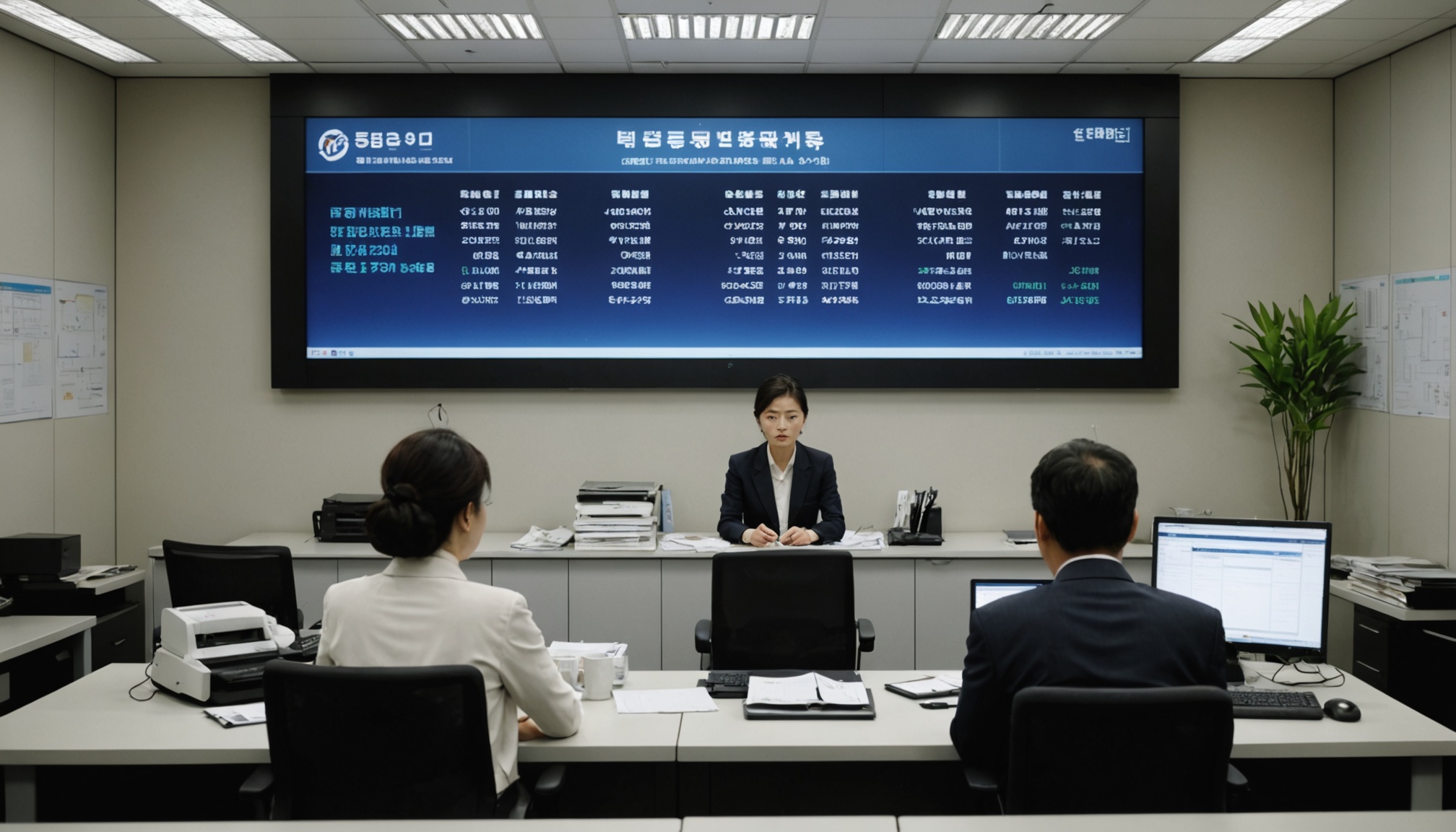
If a sidecar is a speed bump in a fast zone, a circuit breaker is a barricade that closes the entire road.
How Far Must the Index Fall to Trigger — Calculating from the Previous Close
The trigger line is not a fixed index level — it is recalculated each day from the previous day's close. The calculation is simple multiplication. Assuming the previous day's KOSPI closed at 3,000 and KOSPI 200 futures at 400, today's trigger lines work out as follows.
| Mechanism / Stage | Calculation | Trigger Level (points) |
|---|---|---|
| Sidecar (decline) | Futures 400 × 0.95 | 380.00 |
| Sidecar (advance) | Futures 400 × 1.05 | 420.00 |
| Circuit Breaker Stage 1 | 3,000 × 0.92 | 2,760 |
| Circuit Breaker Stage 2 | 3,000 × 0.85 | 2,550 |
| Circuit Breaker Stage 3 | 3,000 × 0.80 | 2,400 |
Writing down these five numbers in the morning on a volatile day lets you gauge for yourself which defensive line the market is approaching before any news alerts appear. KOSDAQ works the same way — multiply the previous close by KOSDAQ 150 futures ±6% and index ±3%, plus the 8%, 15%, and 20% lines.

What Investors Can Do During Activation
During a sidecar, trading continues. Only program trading orders stop, so the order book becomes thinner than usual and execution volatility may increase, but orders can be placed as normal. During a circuit breaker, however, market trading itself is halted. The 20 minutes are a time when no orders can be placed — and a time the system has forcibly created to check the news and re-examine your judgment.
What to do in these 20 minutes is not to find the sell button, but to classify the cause of the crash. Whether it is a supply-demand event such as a derivatives expiry or large program order flow, or a fundamental shock such as war or a credit crisis, determines the trajectory after trading resumes. In either case, the premise must be that if contrary evidence emerges, the judgment is dropped quickly — just as the March 2020 fundamental shock crash ended briefly following liquidity responses.

What to Watch
- KOSPI 200 futures movement rate — moves before the spot market. Approaching ±5% is an imminent sidecar signal
- The 8%, 15%, and 20% lines from the previous close — calculate in advance on mornings with expected high volatility
- The clock — sidecar does not activate after 2:50 PM; late-session volatility is outside the protection of the system
- Activation history for the day — each stage is limited to once daily; defensive lines already used do not reset the same day
- Nature of the crash cause — whether it is supply-demand or fundamental determines the appropriate response after trading resumes